
Klaipėda Tourism Information Centre is your gateway to a city where history, vibrant cultural life and a contemporary rhythm come together. We provide reliable information about attractions, events, routes and leisure opportunities – everything you need to make your experience of Klaipėda both engaging and memorable. We organise classic and themed tours of the city and its surroundings, as well as MICE and leisure events.
About Klaipėda TIC
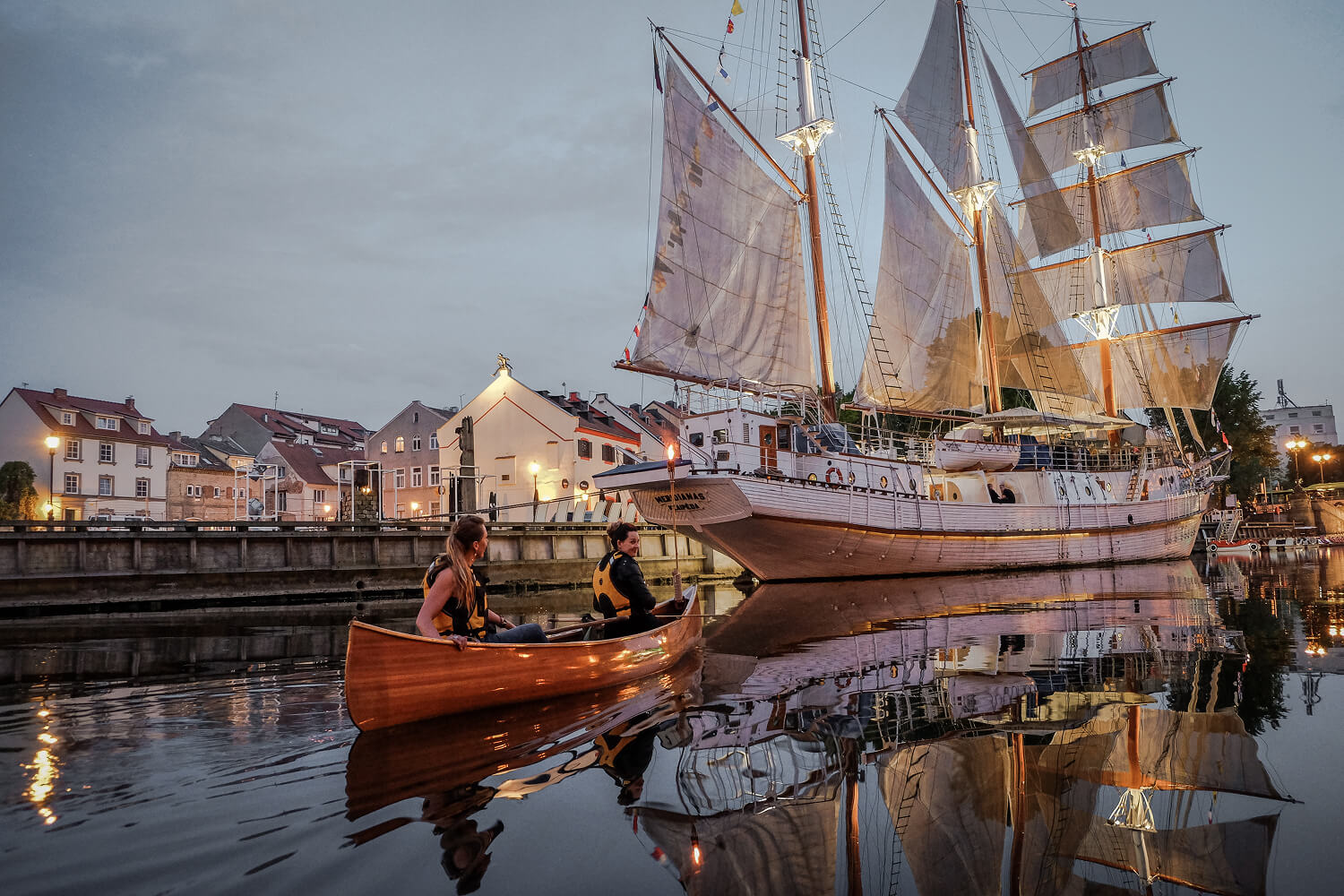
We are more than a source of assistance for travellers – we are ambassadors for the stories of our city, helping Klaipėda become more visible, more loved and more memorable. Here, you can discover souvenirs that reflect the unique character of Klaipėda and receive recommendations for accommodation, dining and transport – everything you need for a smooth, enjoyable and inspiring stay. We invite you to stop by, ask for advice, explore what we have to offer and set off on your own journey through the city we love. Our goal is for every visitor leaving this remarkable port city, shaped by the unique magic of the Baltic coast, to take home not only lasting memories, but also a desire to return.

Klaipėda Tourism Information Centre provides information about places to visit and events in Klaipėda. We organise both traditional and unique guided tours in Klaipėda and the surrounding region, as well as MICE and leisure events. You can also find souvenirs from Klaipėda and Lithuania here, while the KTIC team will be happy to assist you in finding accommodation, dining and transport services. Turgaus st. 7, Klaipėda LT-91247 Tel. +370 46 412186 Email: tic@klaipedainfo.lt
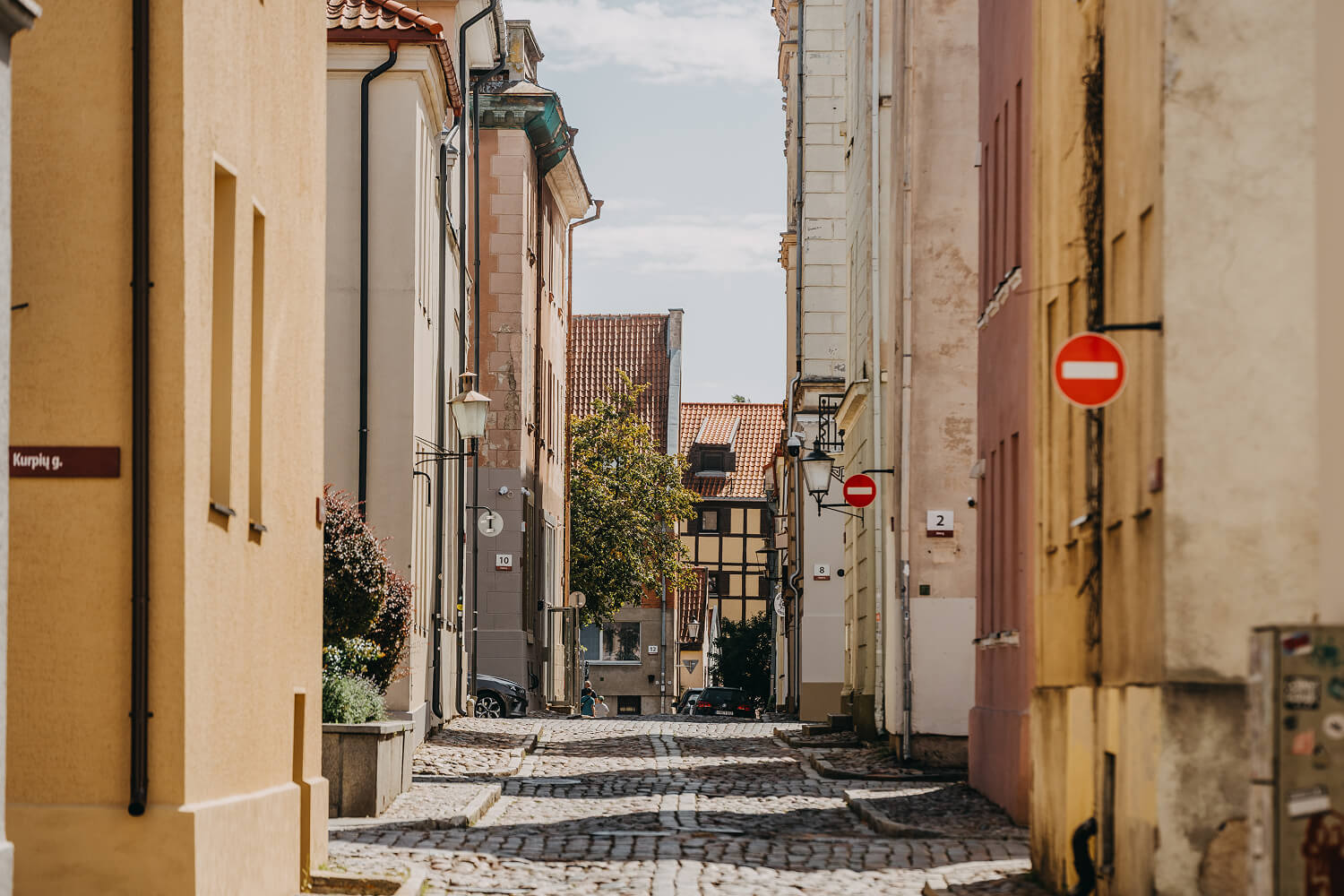
The first travel bureau in Klaipėda was established in 1964. In 1992, the bureau was reorganised as UAB Klaipėda Tourism Information Centre.
Establishment of the Public Institution
On 8 November 2002, by decision of the Klaipėda City Municipal Council, the Public Institution Klaipėda Tourism and Culture Information Centre was established.
By Order No. AD1-1235 of 5 October 2022, the Centre was renamed the Public Institution Klaipėda Tourism Information Centre.
The stakeholder of the Public Institution KTKIC is Klaipėda City Municipality. The share capital amounts to EUR 16,000.
Social Responsibility and Initiatives
The Public Institution Klaipėda Tourism Information Centre (abbreviated as KTIC) is a non-profit organisation operating in the fields of tourism, education (including offering internships to higher education students), research (in cooperation with educational institutions) and culture, and providing public information and services in these fields.
The purpose of KTIC is to disseminate information about Klaipėda and the surrounding region.
TOP 10 countries of visitors to the Public Institution Klaipėda Tourism Information Centre
2025
Top 10 (out of 69 countries) countries of visitors to the Public Institution Klaipėda Tourism Information Centre
- Germany 38,15% (6565);
- USA 10,05% (1729);
- Poland 6,46% (1112);
- Spain 5,29% (911);
- England 5,06% (870);
- France 3,09% (532);
- Latvia 2,41% (414);
- Italy 1,97% (339);
- Sweden 1,03% (177);
- Czechia 0,97% (167).
From Lithuania – 16,25% (2797).
2024
Top 10 (out of 51 countries): countries with the highest share of visitors (%), according to KTIC data
1. Germany 31,81% (5101);
2. USA 9,41% (1509);
3. England 7,19% (1153);
4. Poland 5,89% (945);
5. Spain 4,34% (696);
6. France 3,95% (634);
7. Latvia 2,55% (409);
8. Italy 1,46% (234);
9. Sweden 1,27% (204);
10. Finland 1,00% (164).
From Lithuania – 22,06% (3537).
2023
Top 10 (out of 51 countries): countries with the highest share of visitors (%), according to KTIC data
1. Germany 25,12% (2350);
2. Poland 9,52% (891);
3. USA 6,59% (617);
4. Latvia 4,71% (441);
5. England 4,50% (421);
6. France 4,35% (407);
7. Spain 3,83% (359);
8. Sweden 2,86% (268);
9. Italy 1,64% (154);
10. Austria 1,56% (146).
From Lithuania – 23,64% (2211).
2022
Top 10 (out of 50 countries): countries with the highest share of visitors (%), according to KTIC data
Germany 12,9%;
USA 4,96%;
Poland 3,35%;
Latvia 2,88%;
England 2,18%;
France 1,53%;
Spain 1,39%;
Estonia 1,24%;
Netherlands 1,7%;
Italy 0,88%.
(From Lithuania – 51,87%)
2021
TIC visitors – 11630 (from 51 countries).
Top 10:
1 Germany 1998;
2 Poland 535;
3 Latvia 294;
4 France 292;
5 Spain 206;
6 Netherlands 152;
7 England 137;
8 Estonia 121;
9 Italy 116;
10 USA 102.
(From Lithuania – 6734).
Cruise traffic:
Ships – 2,
Passengers – 1076.
2020
TIC visitors – 12417 (from 49 countries).
Top 10:
1 Germany 2522;
2 Latvia 1055;
3 Poland 634;
4 Estonia 575;
5 Russia 247;
6 Finland 225;
7 France 198;
8 Netherlands 105;
9 USA 84;
10 Spain 69. (
From Lithuania – 6128).
Cruise traffic:
Ships – 0,
Passengers – 0
2019
TIC visitors – 46824 (from 122 countries).
Top 10:
1 Germany 13466;
2 United Kingdom 2754;
3 Poland 2096;
4 France 2084;
5 Latvia 1850;
6 USA 1728;
7 Russia 1496;
8 Netherlands 1364;
9 Spain 1310;
10 Switzerland 1162.
(From Lithuania – 8228).
Cruise traffic:
Ships – 51,
Passengers – 68000.
2018
TIC visitors – 47019 (from 71 countries).
Top 10:
1 Germany 11868;
2 USA 3989;
3 United Kingdom 2337;
4 Poland 1822;
5 France 1792;
6 Latvia 1596;
7 Russia 1585;
8 Spain 1077;
9 Austria 969;
10 Netherlands 968.
(From Lithuania – 9815).
Cruise traffic:
Ships – 58,
Passengers – 69651.
2017
TIC visitors – 46702 (from 110 countries).
Top 10:
1 Germany 13710;
2 USA 2661;
3 Poland 2544;
4 Latvia 2084;
5 Netherlands 1970;
6 United Kingdom 1820;
7 France 1693;
8 Russia 1507;
9 Switzerland 1337;
10 Estonia 1056.
(From Lithuania – 6735).
Cruise traffic:
Ships – 63,
Passengers – 74716.
2016
TIC visitors – 50498 (from 110 countries).
Top 10:
1 Germany 21495;
2 USA 2794;
3 Latvia 1886;
4 United Kingdom 1771;
5 France 1541;
6 Russia 1624;
7 Spain 1445;
8 Italy 1409;
9 Poland 1274;
10 Estonia 853.
(From Lithuania – 6758).
Cruise traffic:
Ships – 52,
Passengers – 64285.
2015
TIC visitors – 50404 (from 43 countries).
Top 10:
1 Germany 22272;
2 USA 2770;
3 France 2235;
4 United Kingdom 2098;
5 Italy 1818;
6 Spain 1610;
7 Latvia 1533;
8 Poland 1530;
9 Russia 1441;
10 Estonia 742.
(From Lithuania – 6205).
Cruise traffic:
Ships – 51,
Passengers – 60202.
2014
TIC visitors – 44416 (from 106 countries).
Top 10:
1 Germany 17618;
2 Russia 2554;
3 USA 2432;
4 Poland 1993;
5 United Kingdom 1984;
6 Latvia 1906;
7 Italy 1514;
8 France 1350;
9 Spain 1164;
10 Estonia 805.
(From Lithuania – 5098).
Cruise traffic:
Ships – 63,
Passengers – 57797.
2013
TIC visitors – 42917 (from 106 countries).
Top 10:
1 Germany 20213;
2 Russia 2475;
3 Italy 1722;
4 USA 1547;
5 Poland 1529;
6 France 1498;
7 United Kingdom 1158;
8 Latvia 1015;
9 Spain 980;
10 Switzerland 862.
(From Lithuania – 4111).
Cruise traffic:
Ships – 40,
Passengers – 32757.
2012
TIC visitors – 39884 (from 101 countries).
Top 10:
1 Germany 17054;
2 Russia 2441;
3 Poland 2015;
4 France 1449;
5 United Kingdom 1067;
6 Latvia 1050;
7 Italy 1021;
8 Spain 956;
9 Netherlands 850;
10 USA 764.
(From Lithuania – 5603).
Cruise traffic:
Ships – 43,
Passengers – 26769.
2011
TIC visitors – 41123 (from 94 countries).
Top 10:
1 Germany 18172;
2 Spain 3815;
3 Russia 1686;
4 Italy 1639;
5 France 1083;
6 Poland 958;
7 USA 809;
8 Netherlands 779;
9 Latvia 742;
10 United Kingdom 714.
(From Lithuania – 4945).
Cruise traffic:
Ships – 36,
Passengers – 21478.
2010
TIC visitors – 32496 (from 87 countries).
Top 10:
1 Germany 13150;
2 Spain 3191;
3 Poland 1227;
4 Latvia 1226;
5 France 1043;
6 Italy 898;
7 Russia 871;
8 United Kingdom 568;
9 Czechia 528;
10 USA 511.
(From Lithuania – 4918).
Cruise traffic:
Ships – 45,
Passengers – 35201.
2009
TIC visitors – 32015 (from 85 countries).
Top 10:
1 Germany 11452;
2 Spain 2628;
3 Poland 1285;
4 France 1119;
5 Latvia 1051;
6 Russia 937;
7 United Kingdom 723;
8 Italy 700;
9 USA 596;
10 Switzerland 468.
(From Lithuania – 5129).
Cruise traffic:
Ships – 50,
Passengers – 33512.
2008
TIC visitors – 28337 (from 73 countries).
Top 10:
1 Germany 10047;
2 Spain 4976;
3 Latvia 1324;
4 Poland 1188;
5 USA 721;
6 Estonia 705;
7 France 656;
8 Italy 444;
9 Norway 410;
10 Finland 402.
(From Lithuania – 3028).
Cruise traffic:
Ships – 46,
Passengers – 32461.
2007
TIC visitors – 60323 (from 64 countries).
Top 10:
1 Germany 8548;
2 USA 1271;
3 Latvia 1102;
4 Poland 811;
5 Estonia 775;
6 United Kingdom 722;
7 Spain 650;
8 France 608;
9 Italy 509;
10 Netherlands 440.
(From Lithuania – 3749).
Cruise traffic:
Ships – 65,
Passengers – 36865.
2006
TIC visitors – 23423 (from 55 countries).
Top 10:
1 Germany 8919;
2 Latvia 1429;
3 Poland 874;
4 USA 786;
5 Estonia 779;
6 France 768;
7 Finland 766;
8 Italy 604;
9 Spain 542;
10 Sweden 525.
(From Lithuania – 3786).
Cruise traffic:
Ships – 48,
Passengers – 25014.
2005
TIC visitors – 18312 (from 53 countries).
Top 10:
1 Germany 7200;
2 USA 1294;
3 Latvia 853;
4 France 755;
5 Poland 717;
6 Norway 525;
7 Italy 490;
8 Estonia 423;
9 Finland 375;
10 Sweden 333.
(From Lithuania – 2959).
Cruise traffic:
Ships – 59,
Passengers – 24107.
2004
TIC visitors – 14354 (from 46 countries).
Top 10:
1 Germany 5895;
2 Latvia 708;
3 France 626;
4 Poland 460;
5 United Kingdom 439;
6 USA 399;
7 Italy 396;
8 Finland 384;
9 Sweden 359;
10 Estonia 310.
(From Lithuania – 2085).
Cruise traffic:
Ships – 49,
Passengers – 14206.
2003
TIC visitors – 8941 (from 46 countries).
Top 10:
1 Germany 3378;
2 Latvia 447;
3 Poland 344;
4 United Kingdom 220;
5 Estonia 218;
6 Sweden 207;
7 France 185;
8 Italy 172;
9 Finland 172;
10 USA 149.
(From Lithuania – 1929).
Cruise traffic:
Ships – 28,
Passengers – 8786.
2002
TIC visitors – 7348 (from 42 countries).
Top 10:
1 Germany 2610;
2 Latvia 398;
3 Sweden 385;
4 United Kingdom 287;
5 Finland 280;
6 Estonia 261;
7 Czechia 256;
8 Poland 251;
9 USA 246;
10 France 209.
(From Lithuania – 7348).
Cruise traffic:
Ships – 23,
Passengers – 7706.
2001
TIC visitors – 5934 (from 45 countries).
Top 10:
1 Germany 2107;
2 Latvia 462;
3 Finland 285;
4 Estonia 257;
5 Czechia 219;
6 Poland 200;
7 Sweden 163;
8 Italy 132;
9 Switzerland 116;
10 France 112.
(From Lithuania – 922).
Cruise traffic:
Ships – 22,
Passengers – 5946.
2000
TIC visitors – 5866 (from 42 countries).
Top 10:
1 Germany 2251;
2 Latvia 505;
3 Sweden 226;
4 Estonia 201;
5 Finland 171;
6 Czechia 161;
7 United Kingdom 152;
8 Poland 138;
9 USA 110;
10 Italy 80.
(From Lithuania – 1350).
Cruise traffic:
Ships – 15,
Passengers – 4613.
Main objectives of the Public Institution KTIC
1. To strengthen the economic and environmental well-being of Klaipėda city and the region through the dissemination and promotion of tourism information and destination marketing;
2. To develop a modern tourism information system providing Lithuanian and international tourists with comprehensive information about tourism services available in Klaipėda and throughout Lithuania’s coastal region;
3. To contribute to the implementation of the objectives set out in Klaipėda City’s strategic development plan by building the city’s image in the tourism market.
The Public Institution KTIC carries out the following activities
1. Provides free information about tourism infrastructure, travel agencies and their activities, attractions in Klaipėda and across Lithuania, festivals, exhibitions and concerts;
2. Organises trips around Lithuania for groups and individual tourists;
3. Provides intermediary services for bus and car rental;
4. Provides guide services in Lithuanian, Russian, English, German, Italian, Swedish and other languages;
5. Organises guide training courses in Western Lithuania;
6. Publishes information materials about tourism services in Klaipėda and the region;
7. Sells tourism information publications, maps and souvenirs;
8. Assists tourist groups and individual travellers with booking accommodation and catering services;
9. Provides information to the National Tourism Information System;
10. Represents the city of Klaipėda at international exhibitions, conferences and other events;
11. Develops the tourism image of Klaipėda and the region in Lithuanian and international markets;
12. Develops the tourism information system in the Klaipėda region;
13. Provides services that improve the quality of the visitor experience in the region;
14. Conducts visitor research to improve the effectiveness of marketing activities;
15. Cooperates with the city’s educational institutions that train tourism professionals;
16. Provides additional services to tourists;
17. Other
Completed Projects
2023
2022
Project title: “The Lost Kingdom”
Project implementation period: 1 August 2022 – 31 December 2020.
Project budget: €6,749.99, of which €4,999.99 was funded from the Klaipėda City Municipality budget.
Project objective: Using engaging, playful artistic expression, to create an attractive information platform – a map with a historical time filter – enabling the general public to discover signs of the lost kingdom in today’s context in an unexpected way, thereby highlighting and strengthening the historical links between Lithuania Minor and Lithuania Major.
During the project, surviving royal heritage sites in Klaipėda were decoded and revealed, and a map of these surviving locations was created using the RGB principle (colours for viewing the historical layer: green/red). Fifty RGB maps with coloured glass filters/magnifiers were produced (they can be borrowed like books from the I. Simonaitytė and I. Kant libraries in Klaipėda and from Klaipėda Tourism Information Centre), along with three large-format maps, which are also displayed in the city libraries and at the Tourism Information Centre.

2020
Project: enhancement of the www.klaipedatravel.lt website using innovative solutions
As part of this project, the following new tools were introduced to expand the functionality of the KTIC website:
- An e-commerce platform was integrated into www.klaipedatravel.lt for the sale of excursion tickets and products (shopping basket by category and product, order confirmation, payment, etc.). This solution not only supports the institution’s commercial activities but also helps small and medium-sized businesses increase sales of services such as excursions, guide services and souvenirs. The sales platform also includes a dedicated “Made in Klaipėda” section where artists from Klaipėda can sell their products.
- A chatbot was integrated into www.klaipedatravel.lt, with scenarios developed to answer tourists’ questions and act as a virtual guide during their visit to Klaipėda. The scenarios include answers to the main questions asked by city visitors, assistance in choosing activities in Klaipėda, real-time suggestions for events and entertainment, and more. The chatbot scenario library was expanded to 400 messages in Lithuanian and English. Chatbot functionality was also integrated into Facebook Messenger. This solution enables visitors to access up-to-date information 24/7.
- The “Talking Sculptures” audio tours were created and integrated into www.klaipedatravel.lt. The tours can also be used independently via QR codes. During the project, information was prepared for eight sculptures in Klaipėda in three languages (Lithuanian, English and German), the texts were recorded, QR codes were generated and identification plaques were produced. This new and innovative way of presenting Klaipėda’s attractions allows visitors to explore the city independently.
All these solutions were developed and implemented within three months. As these tools had not previously been used in the activities of Klaipėda Tourism Information Centre, their introduction on the website now makes it possible to offer services to residents and visitors more effectively, increase service sales and strengthen the image of Klaipėda as a modern, convenient and contemporary city.
The “VasarOK Klaipėdoje” project – a campaign promoting Klaipėda’s beaches on LED screens in Vilnius and Kaunas. By introducing this new marketing tool, information about Klaipėda’s beaches, opportunities for relaxation and active leisure, cultural institutions and events was visually presented to a wider audience. This marketing channel was chosen for several reasons:
- The screens are located on major city roads, near large shopping centres and at the busiest intersections. Nearby are key facilities and destinations such as restaurants, cafés, petrol stations, business centres, cinemas and more;
- Advertising shown on LED screens is comparable to television or social media advertising because images and information are delivered in video format;
- As the pace of life and traffic volumes increase, people travelling within and between cities spend part of their time in cars at intersections, making the video clips shown on screens highly visible and memorable. According to statistics, dynamic visual advertising is noticed 400% more often;
- This type of visual communication was used for the first time both in KTIC activities and in presenting Klaipėda’s tourism resources.
This tool not only informed potential visitors about Klaipėda’s tourism potential but also helped shape the image of the port city as an attractive destination.
Results of the “VasarOK Klaipėdoje” project: four 10-second advertising clips were created – “Shall we head to the sea?”, “Catch your wave!!!”, “Klaipėda – where the sunsets are most beautiful” and “Feel the power of the sea”; 20 high-quality photographs showcasing Klaipėda’s tourism resources were acquired; the four advertising clips were shown on five LED screens (in Vilnius: “Spaudos rūmai”, “Akropolis”, “Ukmergės”; in Kaunas: “Birštonas”, “Murava”). The campaign generated a total of 80,050 impressions and an opportunity-to-see (OTS) figure of 11,161,483. The clips were seen not only by residents of Vilnius and Kaunas, but also by visitors to these cities.
Project “Training for Tourism Professionals in the Klaipėda Region”
The training was intended for employees of Klaipėda Tourism Information Centre. Topics and duration: “Social Media” – 8 hours, “Google AdWords” – 4 hours, “Google Analytics” – 4 hours. This was the first time training of this kind had been organised for KTIC specialists.
As information technologies develop rapidly and the number of communication channels grows, social networks are becoming one of the main digital channels worldwide through which tourism professionals can communicate with customers and partners and receive news and updates. Current trends show that users spend a significant share of their time in social media applications. However, the experience and practical skills of many tourism professionals in working with social networks, platforms and Google tools lag considerably behind international practice. In their day-to-day work, tourism professionals use only a small share of the opportunities offered by social networks to generate measurable sales in both physical and digital environments, retain loyal customers and grow their follower base.
Google Analytics is a powerful web marketing tool used worldwide. It makes it possible to track visitor traffic and behaviour on a website, assess website performance, and measure the value and return on investment of advertising channels. By mastering Google Analytics reports, organisations can optimise websites, improve advertising performance and increase awareness of tourism services and products.
Google AdWords is one of the most effective tools for increasing awareness, driving sales and growing a business. Online advertising search systems make it possible to reach interested potential customers, partners and users. Google AdWords can be used to analyse and optimise ads, successfully increase awareness and sales, create and optimise advertising campaigns for Google Search, and present a company and its services on Lithuania’s and international markets’ most popular portals.
Special equipment purchased with project funding from the Lithuanian Council for Culture is used (2 sets of 20 units). The speaker’s audio is transmitted directly to the receivers worn by participants, with a signal range of up to 300 metres. In 2020, 31 guided tours were conducted using this tour equipment.
2019
Set of specialised route publications: 1. Street art leaflet “Expressive Klaipėda” (in Lithuanian and English); 2. Route leaflet “Maritime Klaipėda” (in Lithuanian and English).
Project “The History of Klaipėda in Our Hearts”. Educational activities and free guided tours were organised for senior citizens, people experiencing social exclusion, families with fewer social skills, large families and residents of Klaipėda of different nationalities. A total of 500 people took part.
2014
Project title: “Tourism Information Network” (“TourInfoNet”)
Three countries participated in the project: Lithuania (Klaipėda Tourism Information Centre, Klaipėda District Tourism Information Centre, Palanga Tourism Information Centre), Poland (Pomorskie Regional Tourist Organization, Warmia-Masurian Regional Tourist Organization) and Russia (Agency Of Tourism Of The Kaliningrad Region, Kaliningrad Regional Tourism Information Centre, Svetlogorsk Tourism Information Center).
The project focused on creating a shared tourism information system for the region – the Baltic Sea coastal area.
Available here:
- Articles of Association
- Planning Documents
- Remuneration
- Incentives and Awards
- Information on Funds Used to Publicise the Institution’s Activities
- Public Procurement
- Budget Execution Report Sets
- Financial Statement Sets
- Supervision of Economic Operators
- Official Passenger Cars
Articles of Association
Stakeholders
- List of stakeholders – KTKIC stakeholder list
- Formation of share capital – KMS Council Decision No. T2-18 of 30 January 2020 on the formation of KTKIC stakeholder capital
Management Board
- Management Board – KTKIC Board, June 2020
- Management Board – KTKIC Board approved by KMSA Order No. AD1-205 of 18 February 2022
- Management Board – KMS Order No. AD1-1375 of 9 November 2022 on the formation of the KTIC Board
- Management Board – KTIC Board approved on 20 October 2023 by Order No. M-655 of the Mayor of Klaipėda City Municipality
Planning Documents
Founder’s Letters of Expectation
- KMSA Order No. AD1-1084 of 16 September 2021 approving the KTKIC Letter of Expectation
- KMSA Letter of Expectation for KTKIC, 2023–2025
- KTIC Letter of Expectation for 2024, approved on 4 October 2023 by M-592
- KTIC Letter of Expectation for 2026–2028
Activity Reports
- 2021 KTKIC Director’s Activity Report
- 2022 KTKIC Director’s Activity Report
- 2023 KTIC Director’s Activity Report
- 2025 KTIC Director’s Activity Report
Strategic Activity Plan
- KTKIC Strategic Activity Plan 2020–2022
- Report on the Implementation of the 2020 KTKIC Strategic Activity Plan
- Report on the Implementation of the 2021 KTKIC Strategic Activity Plan
- KTIC Strategic Activity Plan 2024–2026
- KTIC Strategic Activity Plan 2025–2027
- KTIC Strategic Activity Plan 2026–2028
Klaipėda’s Blue Breakthrough
- Find more information here – https://www.klaipeda.lt/lt/klaipeda2030
Whistleblower Protection. Internal Channel
General Data Protection Regulation
Remuneration
| Positions | Average monthly gross salary for Q3 2025 (before tax), EUR |
| Director | By Order No. M3-27 of the Mayor of Klaipėda City Municipality dated 19 February 2024, a position salary coefficient of 1.80 was set for the Director of the Public Institution Klaipėda Tourism Information Centre with effect from 2 January 2024. |
| Specialists | (Q1 2026) – EUR 2,048.27; (Q1 2025) – EUR 2,271.24; Q2 2025 – EUR 1,367.07; Q3 2025 – EUR 1,479.32; Q4 2025 – EUR 1,566.22; EUR 1,514.97 (Q4 2024); EUR 1,875.22 (Q2 2024); EUR 1,741.91 (Q1 2024); EUR 1,493.18 (Q4 2023); EUR 1,463.35 (Q4 2022) |
- Order M-103 of 25 January 2024 on the Remuneration System for Heads of Public Institutions
- KTIC Remuneration System DU-2024-03, 2024 V (04 October 2023 MP-590)
- Approval of the KTIC Organisational Structure
- KTIC Organisational Structure (annex to M-590)
Incentives and Awards
No incentives or awards were granted.
Information on Funds Used to Publicise the Institution’s Activities
| Measure: Effective tourism communications for Klaipėda | 2023 | H1 2024 | H2 2024 |
| Publicity expenditure, EUR: | 2984,55 | 335,72 | 660,30 |
Public Procurement
- KTKIC Public Procurement Plan 2020
- KTKIC Public Procurement Report 2020
- KTKIC Public Procurement Plan 2021
- Procurement Plan 2021 (Excel)
- KTIC Public Procurement Plan 2022
- KTIC Public Procurement Plan 2023
- KTIC Public Procurement Plan 2024
- KTIC Public Procurement Plan 2025
- KTIC Public Procurement Plan 2026
Public procurements organised by the Public Institution Klaipėda Tourism Information Centre can be found in the public procurement system.
Budget Execution Report Sets
None
Financial Statement Sets
- KTKIC Annual Financial Statement Set 2019
- KTKIC Annual Financial Statement Set 2020
- KTKIC Annual Financial Statement Set 2021
- KMSA Director’s Order No. AD1-406 of 30 March 2022 approving KTKIC’s 2021 financial statements
- KMSA Director’s Order No. AD1-479 of 11 April 2023 approving the 2022 financial statements
- KTIC’s 2023 financial statements and activity report were approved by Order M-378 of 8 April 2024
Supervision of Economic Operators
The Public Institution Klaipėda Tourism Information Centre does not supervise economic operators.
Official Passenger Cars
There are no official vehicles.
[calendar id=”9941″]
Corruption is the direct or indirect seeking, demanding or accepting by a civil servant or a person equivalent to a civil servant of material or other personal benefit (a gift, service, promise or privilege) for themselves or another person in return for performing or failing to perform actions associated with their official duties; it also includes actions or omissions by a civil servant or equivalent person aimed at seeking, demanding or accepting such benefit, as well as the direct or indirect offering or granting of material or other personal benefit (a gift, service, promise or privilege) to a civil servant or equivalent person in return for performing or failing to perform actions associated with their duties, and acting as an intermediary in the commission of the acts described in this provision.
(source: stt.lt)
The aim of corruption prevention is to ensure that the activities of state and municipal institutions and businesses are impartial and transparent.
(source: stt.lt)
Main legislation governing corruption prevention:
- Law of the Republic of Lithuania on the Prevention of Corruption
- National Anti-Corruption Programme of the Republic of Lithuania
Code of Ethics of the Public Institution
Code of Ethics of the Public Institution Klaipėda Tourism and Culture Information Centre.
Register of Gifts and Support Received
In 2020, no gifts or support were received or provided.
In 2021, EUR 125.71 in support was received from the State Tax Inspectorate under the Ministry of Finance of the Republic of Lithuania, in accordance with the Law of the Republic of Lithuania on Charity and Sponsorship, for entities eligible to receive support.
In 2022, no gifts were received; EUR 147.89 in support was received from the State Tax Inspectorate under the Ministry of Finance of the Republic of Lithuania, in accordance with the Law of the Republic of Lithuania on Charity and Sponsorship, for entities eligible to receive support.
2023: EUR 1,150 in support was received from businesses in Klaipėda for the event “St Martin. And His Geese” – an off-season event organised together with Old Town businesses.
2024: no gifts were received; EUR 3,000 in support was received from the Public Institution “Lietuviškos šventės” for the event “St Martin. And His Geese”.
2025: no gifts were received; EUR 2,114.00 in support was received from the Public Institution “Lietuviškos šventės” for the event “St Martin. And His Geese”.
Assessment of Attitudes towards Corruption and Anti-Corruption Capacity within the Institution
In 2019, all employees of the Public Institution KTKIC were surveyed anonymously and areas of activity in which there is a risk of corruption were identified.
In 2020, all employees of the Public Institution KTKIC were surveyed anonymously. The survey found a high level of intolerance towards corruption and a minimal likelihood of corrupt practices occurring.
In 2021, all employees of the Public Institution KTKIC were surveyed anonymously. The survey found a high level of intolerance towards corruption and a minimal likelihood of corrupt practices occurring.
In 2022, all KTIC employees were surveyed anonymously. The employee index of intolerance towards corruption was high, while the likelihood of corrupt practices occurring was minimal.
In 2023, all employees of the Public Institution KTIC were surveyed anonymously. The survey found a high level of intolerance towards corruption and a minimal likelihood of corrupt practices occurring.
In 2024, all employees of the Public Institution KTIC were surveyed anonymously. The survey found a high level of intolerance towards corruption and a minimal likelihood of corrupt practices occurring.
Corruption Prevention Procedure and Action Plan
Corruption Prevention Procedure and Action Plan
The institution follows the corruption prevention planning documents of Klaipėda City Municipality Administration – https://www.klaipeda.lt/lt/korupcijos-prevencija/korupcijos-prevencijos-planavimo-dokumentai/9938/
The Law of the Republic of Lithuania on the Protection of Whistleblowers (hereinafter – the Law) establishes a protection mechanism for persons who provide information about a violation at an institution with which they have or had an employment, service or contractual relationship. The Law also defines the rights and obligations of persons reporting violations within institutions, the grounds and forms of their legal protection, and measures for their protection, encouragement and assistance. Its purpose is to create appropriate conditions for reporting violations of law that threaten or infringe the public interest and to ensure the prevention and detection of such violations.
A violation is a criminal offence, administrative offence, breach of official duties or employment obligations, a serious breach of mandatory professional ethics, an attempt to conceal such a violation, or another infringement of law that threatens or infringes the public interest, which is being planned, committed or has been committed within the Institution and about which the reporting person becomes aware through their current or former service, employment or contractual relationship with the Institution, or during recruitment or other pre-contractual relations.
Reports are submitted in order to protect the public interest. Information submitted solely to protect personal interests will not be considered a whistleblower report.
In order to create appropriate conditions for reporting violations of law and to ensure their prevention and detection, the Law on the Protection of Whistleblowers establishes:
- the grounds and forms of protection for persons who report violations within institutions;
- the rights and obligations of persons who report violations within institutions;
- measures for the protection, encouragement and support of persons who report violations within institutions.
You can submit information about a violation in the following ways:
- By email to jurgita@klaipedainfo.lt
- we recommend submitting the report using the Report of a Violation form
- or in free form, specifying who is preparing to commit, is committing or has committed the violation, when and how it occurred, and what the violation is; the date and circumstances in which you became aware of it; your name, surname, personal identification number or date of birth, workplace and contact details, including an email address and other means of contact; and indicating that the information is being submitted pursuant to the Law on the Protection of Whistleblowers.
- Directly to the competent person at Klaipėda Tourism Information Centre: Jurgita Neniškienė, tel. +370 46 412186, or in person at the address indicated (Turgaus St. 7, Klaipėda), by contacting this person directly.
- IMPORTANT: when sending a report of a violation by post, the envelope must be marked “for the competent person personally”.
- Directly to the Prosecutor’s Office.
- A person should report a violation directly to the competent authority where at least one of the following circumstances applies:
- the violation is of significant importance to the public interest;
- it is necessary to prevent or stop the violation as quickly as possible because significant damage may occur;
- persons in managerial positions or persons connected with the institution through employment or contractual relationships may themselves be committing or may have committed violations;
- information about the violation was submitted through the internal reporting channel, but no response was received, no action was taken in response to the information provided, or the measures taken were ineffective;
- there are reasonable grounds to believe that, if the information is submitted through the internal reporting channel, the whistleblower’s anonymity or the person’s confidentiality may not be ensured, or an attempt may be made to conceal the reported violation;
- the Institution does not have an operational internal channel for reporting violations;
- the person cannot use the internal reporting channel because they are no longer connected with the Institution by an employment or other legal relationship.
- A person should report a violation directly to the competent authority where at least one of the following circumstances applies:
- Public Disclosure
- Information about a violation may be disclosed publicly in order to report an imminent threat to human life, public health or the environment where urgent action is required to prevent such a threat and, due to lack of time, it is not possible to report the violation by other means, or where the violation was reported by other means but the necessary action was not taken in a timely manner.
Under the Law, information about violations may be reported in relation to:
- a threat to public safety or health, or to a person’s life or health;
- a threat to the environment;
- obstruction of or unlawful interference with investigations conducted by law enforcement authorities or with the administration of justice by courts;
- the financing of unlawful activities;
- the unlawful or non-transparent use of public funds or assets;
- assets acquired unlawfully;
- concealing the consequences of a violation or obstructing efforts to determine their extent;
- other violations.
Confidentiality will be ensured for a person who submits information about a violation. The requirement to ensure confidentiality does not apply only in the following cases:
- the person submitting or having submitted information about the violation requests this in writing;
- the person knowingly provides false information.
A person who submits information about a violation does not incur contractual or tort liability, nor liability for insult to honour and dignity or defamation, provided that, when submitting the information in accordance with the procedure established by law, the person reasonably believed the information to be true.
A person is liable for damage arising from the submission of information about a violation only where it is proven that the person could not reasonably have believed the information provided to be true.
Knowingly providing false information, as well as information constituting a state or official secret, does not entitle the person submitting information about a violation to the guarantees provided by law. A person who knowingly provides false information or discloses a state, official or professional secret is liable in accordance with the procedure established by law.
Legal Remedies:
- The rights of a person reporting a violation, an assistant, a whistleblower or a person associated with the violation, and the remedies for protecting those rights, may not be waived, restricted or denied by employment, arbitration or any other agreements.
- If a whistleblower experiences adverse action, they should report it to the competent authority.
- If adverse action is taken against a person who submitted information about a violation through the Municipality’s internal reporting channel, that person should submit a report to the competent authority, which will decide whether to recognise the person as a whistleblower.
- A person who has submitted information about a violation or a whistleblower – including family members, relatives or colleagues of the whistleblower who work for the Municipality or another legal entity linked to the Municipality by a relationship of subordination and who may suffer adverse consequences because of the report – may apply to a court in relation to consequences resulting from adverse measures. A person linked to the Municipality by a service relationship has the right, in accordance with the Law on Administrative Proceedings, to challenge an administrative decision or other action or omission concerning them that causes adverse consequences.
- A whistleblower is entitled to remuneration for valuable information and to compensation for adverse action or possible consequences arising from the report submitted.
The procedure for reporting violations is set out in the Procedure for Reporting Violations, approved by Order No. AD1-104 of the Director of the Municipal Administration dated 17 January 2020, “On the Approval of the Procedure for Reporting Violations”.
In order to effectively implement the provisions of the Law on the Protection of Whistleblowers, Resolution No. 1133 of the Government of the Republic of Lithuania of 14 November 2018 “On the Implementation of the Law of the Republic of Lithuania on the Protection of Whistleblowers” approved the following:
- Procedure for Remunerating Whistleblowers for Valuable Information;
- Procedure for Compensating Whistleblowers for Adverse Action or Possible Consequences Resulting from a Report;
- Procedure for Establishing Internal Reporting Channels and Ensuring Their Operation.
No reports were received in 2023 and none were forwarded to law enforcement authorities.
No reports were received in 2024.
No reports were received in 2025.
Data Processing
Any personal data received or collected by the Public Institution Klaipėda Tourism and Culture Information Centre is processed by Romena Savickienė (romena@klaipedainfo.lt).
Personal data means any information that directly or indirectly identifies an individual.
You are not required to provide us with your personal data. However, if you choose not to provide it, we may be unable to give you information about our products and services, provide the highest level of service or respond to your enquiries.
What Personal Data We Process
We may collect personal data from various sources, including:
* Personal data obtained directly from you
* Automatically collected personal data
* Personal data collected from other sources
Personal data we may collect includes:
first name, surname, date of birth, personal identification number, telephone number, email address, residential address and bank account number.
Purposes of Personal Data Processing
Personal data is used to manage customer orders and offer services.
Banking information is used to issue invoices to customers for goods and services.
Personal data such as an email address, telephone number and customer name is used to resolve issues arising during the sale of goods or provision of services.
An IP address or other means of electronic identification is used for information society services and internet usage statistics.
Legal Basis
Data processing is necessary for the performance of a contract to which the Customer is a party.
The processing of personal data is subject to legal obligations, for example those relating to company accounting and the resolution of consumer disputes.
The Customer has consented to the use of their personal data for the following purposes:
- Personal data is used to manage customer orders and offer services.
- Banking information is used to issue invoices to customers for goods and services.
- Personal data such as an email address, telephone number and customer name is used to resolve issues arising during the sale of goods or provision of services.
- Data may be transferred to Lithuanian public authorities, including law enforcement or other institutions, where required by applicable contracts and legislation, and to courts in the event of disputes between the parties that cannot be resolved through negotiation.
- An IP address or other means of electronic identification is used for information society services and internet usage statistics.
Recipients of Personal Data
Personal data may be transferred to the company’s customer service department in order to resolve technical and organisational issues relating to Customers.
Personal data such as name, telephone number and email address may be transferred to data processors so that they can offer goods or services.
If the company uses the services of accounting firms, personal data will be transferred to them for accounting and financial purposes.
Where necessary to ensure the functionality of the online shop, personal data may be transferred to IT service providers or data storage providers.
Security and Access to Personal Data
Personal data is stored in Lithuania, in the Vilnius region, on servers located within the European Union or the European Economic Area. Personal data may be transferred to countries for which the European Commission has recognised an adequate level of data protection, as well as to United States companies participating in the Privacy Shield framework.
Access to personal data is granted only to company employees who use Customer personal data to provide technical solutions and customer service.
The company applies organisational and information security measures designed to protect personal data against accidental or unlawful destruction, loss, alteration, unauthorised access or disclosure.
Personal data may be transferred to data processors only where agreements governing the transfer and processing of data have been concluded between the processor and the controller. Data processors must implement appropriate technical and organisational measures to ensure the security of personal data.
Access to and Correction of Personal Data
The Customer can access and correct their personal data in their account. If no customer account exists, the Customer should contact customer service by email.
Withdrawal of Consent
If data is processed on the basis of consent, the Customer has the right to withdraw that consent at any time by notifying customer service by email.
Data Retention
When a profile account is closed, all data is deleted except for data that must be retained by law, such as information required for accounting purposes or for resolving consumer disputes.
If a user profile account is not required in order to offer goods or services, the purchase history is retained for three years.
For disputes relating to payments and consumer claims, personal data is retained until the claim is resolved, its requirements are fulfilled, or the applicable limitation period expires.
Personal data required for accounting purposes is retained for seven years.
Deletion of Personal Data
To request the deletion of personal data, please contact customer service by email. A response to the deletion request will be provided and the deletion deadline determined no later than within one month.
Data Portability
A request to transfer personal data submitted by email will be answered no later than within one month. Customer service will verify the Customer’s identity and provide information about the transfer of personal data.
Direct Marketing Communications
An email address and telephone number are used to send direct marketing communications. This personal data is collected from the Customer with their consent. If the Customer does not wish to receive direct marketing communications, they should use the relevant unsubscribe link in the email or contact customer service.
When personal data is processed for direct marketing purposes, including profiling, the Customer may at any time object to the initial and subsequent processing of their personal data, including direct marketing analysis. To request that personal data no longer be processed, the Customer should notify customer service by email; this information must be presented clearly and separately from other information.
Dispute Resolution
Disputes relating to the processing of personal data are handled through customer service – buhalterija@klaipedainfo.lt.
The supervisory authority is the State Data Protection Inspectorate (info@ada.lt).
Cookie Policy
This Privacy Policy (hereinafter – the “Privacy Policy” or the “Policy”) explains how Klaipėda Tourism and Culture Information Centre (hereinafter – the “Institution”) collects and uses information when you use any services offered on our website www.klaipedainfo.lt (hereinafter – the “Website”) or any other services provided by us (hereinafter – the “Services”).
- What Are Cookies?
Cookies are small text files stored in the browser on your device, such as a computer, mobile phone or tablet, when you browse websites. Other technologies, including data that we store in your web browser or device, identifiers associated with your device and other software, are used for similar purposes. Cookies are widely used to make websites function or to make them work more efficiently. In this Policy, all of the technologies described above are referred to as “cookies”. - Why Do We Use Cookies?
We use cookies on our Website to improve your browsing experience, understand how users interact with the Website, analyse traffic and improve the Website. Cookies are used no longer than necessary to achieve the purposes for which they were set. - What Types of Cookies Do We Use?
Strictly Necessary Cookies
These cookies are essential for users to navigate the Website and use its features, for example to remember information entered in forms when a user moves from one page to another during a browsing session. Without strictly necessary cookies, certain Website services could not be provided and the Website would not function as smoothly as intended. These cookies do not collect information for marketing purposes and do not remember which websites you have visited. Analytics Cookies
Analytics cookies collect information about how the Website is used and help improve its performance. For example, they can show which pages are visited most often, help identify errors on the Website and indicate whether advertising displayed on the Website is effective. Analytics cookies do not collect personally identifiable information about users; all information collected by these cookies is aggregated and anonymous. - How Can I Manage Cookies?
If you wish, you can change your browser settings so that you are notified when a cookie is enabled or updated and can choose which cookies to allow, reject or block.
To disable analytics cookies, you can install Google’s tool for blocking Google Analytics cookies via the relevant link. Please note that this may also affect your browsing experience on other websites.
Please note that deleting cookies or disabling their future use may prevent you from accessing certain parts or features of our Website. Changes to cookie settings may also affect other websites you visit.
1. Provides free information about tourism infrastructure, travel agencies and their activities, attractions in Klaipėda and across Lithuania, festivals, exhibitions and concerts;
2. Organises trips around Lithuania for groups and individual tourists;
3. Tarpininkauja nuomojant autobusus bei automobilius;
4. Provides guide services in Lithuanian, Russian, English, German, Italian, Swedish and other languages;
5. Organises guide training courses in Western Lithuania;
6. Publishes information materials about tourism services in Klaipėda and the region;
7. Sells tourism information publications, maps and souvenirs;
8. Assists tourist groups and individual travellers with booking accommodation and catering services;
9. Provides information to the National Tourism Information System;
10. Represents the city of Klaipėda at international exhibitions, conferences and other events;
11. Develops the tourism image of Klaipėda and the region in Lithuanian and international markets;
12. Develops the tourism information system in the Klaipėda region;
13. Provides services that improve the quality of the visitor experience in the region;
14. Conducts visitor research to improve the effectiveness of marketing activities;
15. Cooperates with the city’s educational institutions that train tourism professionals;
16. Provides additional services to tourists;
17. Other
Opening Hours
Opening Hours
10 – 04
Off-season (October–April)
09:00 – 18:00
09:00 – 18:00
09:00 – 18:00
09:00 – 18:00
09:00 – 18:00
–
–
05, 09
Shoulder season (May and September)
09:00 – 18:00
09:00 – 18:00
09:00 – 18:00
09:00 – 18:00
09:00 – 18:00
10:00 – 16:00
–
06-08
High season (June–August, open on weekends as well)
09:00 – 18:00
09:00 – 18:00
09:00 – 18:00
09:00 – 18:00
09:00 – 18:00
10:00 – 16:00
10:00 – 16:00